Driving Transparency and Value in Puerto Rico’s Procurement Processes

Governments, like any organization, buy supplies and need outside help to get things done. Just like any household, the Government needs to buy paper to print and hire electricians to repair faulty wiring. That’s why governments work with various vendors and hire, in addition to the full-time civil service employees, contractors to help.

These contractors and vendors are, of course, paid with taxpayer money. Public procurement in Puerto Rico is over $4 billion a year — about a fifth of the Commonwealth’s consolidated budget, and that is before disaster recovery funds. Worldwide, studies suggest the public sector could cut its purchasing bill by around 15% through better procurement alone. And internationally, more than half of foreign bribery cases involve obtaining a public contract.

In the words of the Executive Director of the Financial Oversight and Management Board for Puerto Rico Robert F. Mujica, Jr.: “Procurement is where a very large amount of public money meets a very real risk of things going wrong.”

And how can we all make sure the right contractor for the job is hired for a fair price and is paid properly – without political favor?

Governments create rules, known as regulations, for how contractors are hired and paid. The basic principles of those rules are transparency, so taxpayers can see who is hired and why, and fairness, so that contractors can compete fairly to be hired for the job at hand.

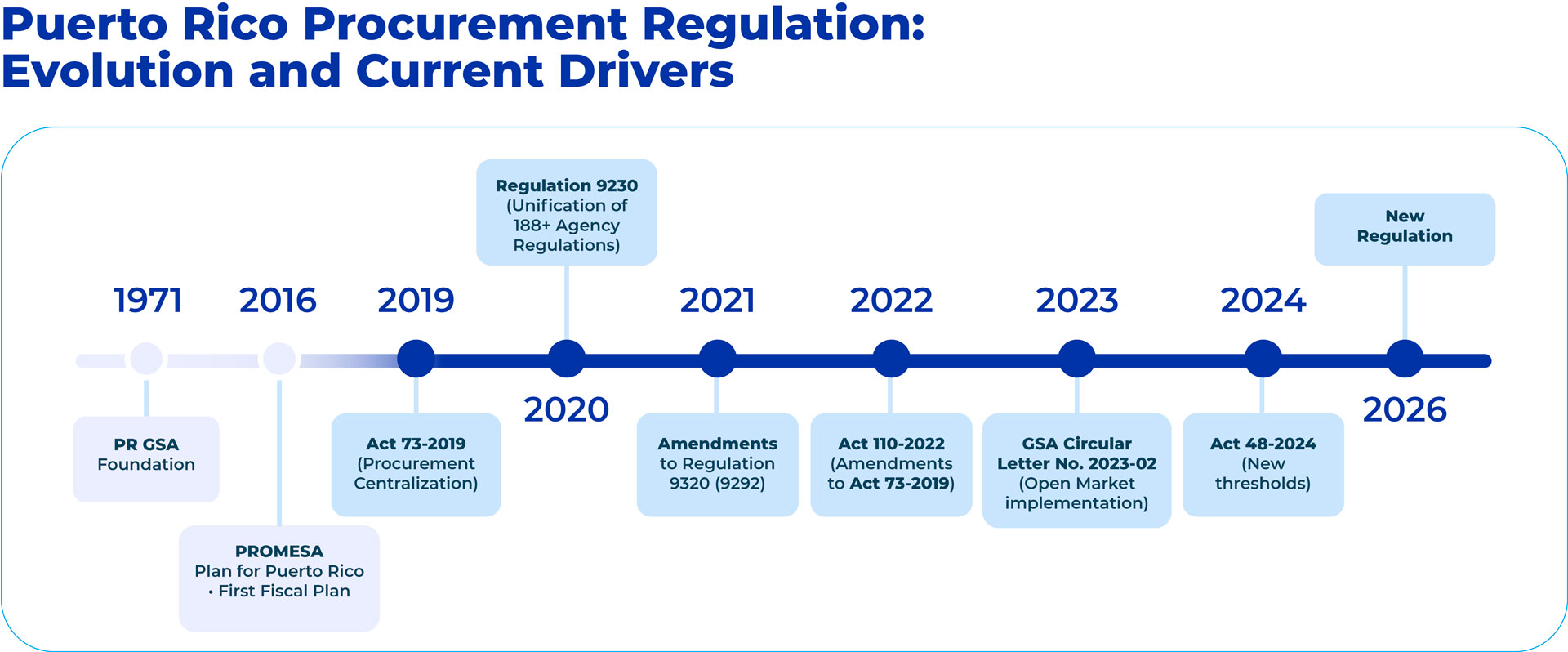
In Puerto Rico, strong procurement rules were missing when PROMESA was enacted. Many deficiencies came to light during the Financial Oversight and Management Board for Puerto Rico’s review of contracts, revealing a lack of uniform rules for purchases. So, Puerto Rico’s General Services Administration (GSA) and the Oversight Board together worked on new rules. In 2020, the Oversight Board approved Regulation No. 9230 to improve the Government’s practices of purchasing goods and services, and what is known as non-professional services (for example maintenance, food services, and cleaning services), consolidating more than 188 separate agency rulebooks into one. Before that, only a fraction of annual contracts ran through a central process.

In February 2026, GSA took another step forward, designing a new regulation based on the one prior, but with several improvements, to further strengthen and clarify the rules. Thus, the Oversight Board approved the new Regulation 9734 Uniform Regulation for Procurement and Bids of Goods, Works and Nonprofessional Services, effective on February 9, 2026, which brings more transparency best practices to government procurement.

Fostering Better Procurement Practices Through Regulation

Transparent, competitive bidding, and new digital tools should go a long way to ensure that the Government receives maximum value for every purchase. This is not only fiscally responsible, but it is also essential to restoring trust in public institutions and fostering financial stability.

A particularly important element of the new regulation addresses the ambiguity between professional and non-professional services. The regulation clarifies this distinction. This is critical because non-professional services require competitive procurement while professional services operate under more relaxed standards.

Non-professional services now explicitly include, for example, surveillance and security, pest control, landscaping, cleaning and maintenance, basic technological services, banking services, equipment and vehicle rentals, telecommunications, billing and collection services, and insurance contracts unrelated to health services.

Professional services include, for example, medicine, law, accounting, consulting, engineering, architecture, public relations, advertising, financial advisory, and specialized technological support services such as software and app development, and cybersecurity consulting.

This clarification reduces opportunities for entities to circumvent competitive procurement requirements by misclassifying services.

Other Important Improvements to Puerto Rico’s Procurement

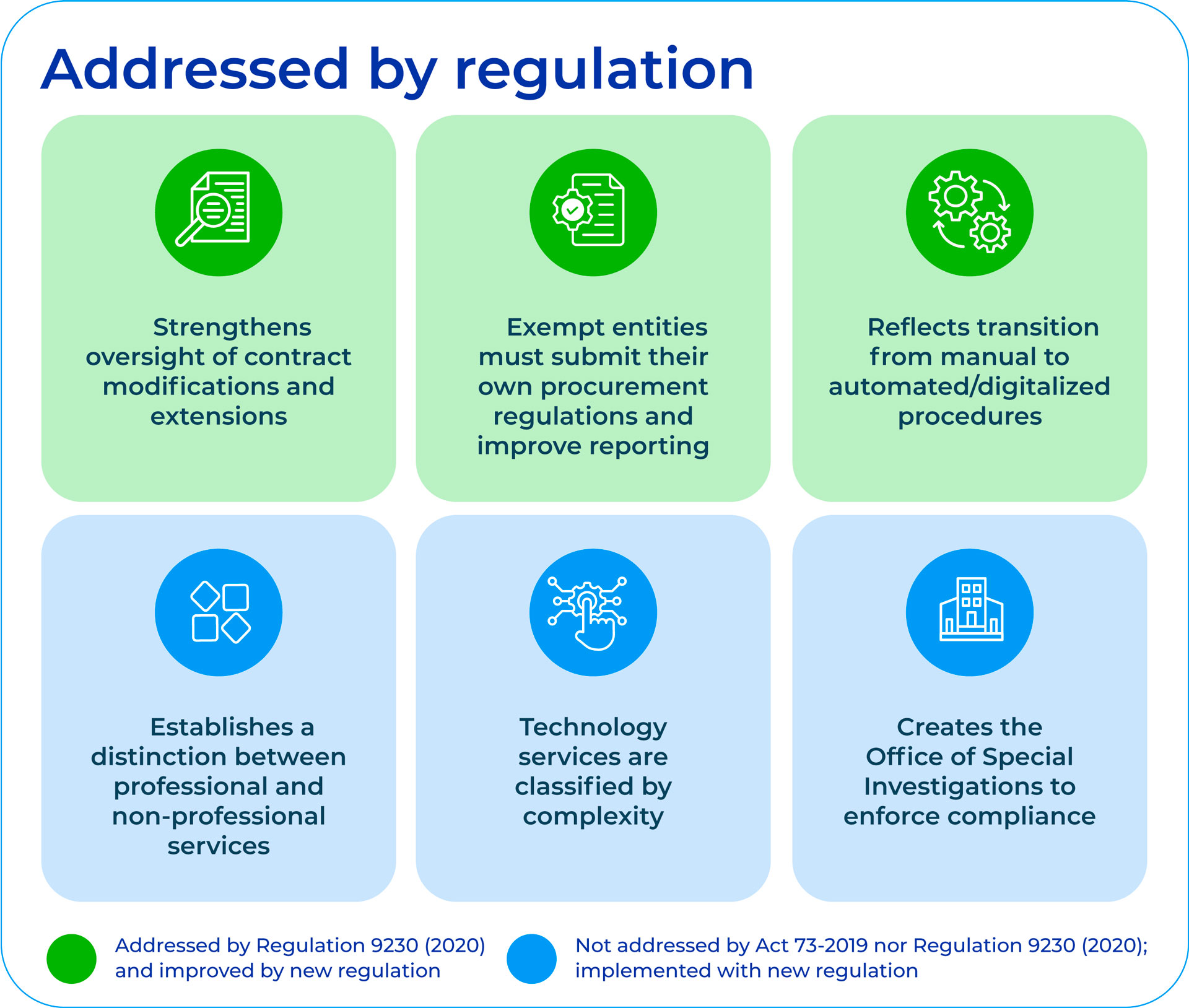
The Office of Special Investigations is responsible for monitoring. The new regulation establishes the Office of Special Investigations, granting it authority to monitor, investigate, and intervene with government agencies and exempt entities to enforce compliance with regulation requirements.

Exempt entities must submit their procurement regulations to GSA. The new regulation requires exempt entities to submit their procurement regulations to GSA for review and approval. Regulations adopted without GSA approval will be invalidated; purchases made under unapproved regulations will be null and void; and administrative fines may be imposed.

Enhanced reporting is required of exempt entities. The new regulation introduces monthly reporting requirements that exempt entities must comply with by submitting reports detailing all purchases and bids. If an exempt entity receives a notification, it must implement corrective action plans within 15 days or face fines ranging from $1,000 to $5,000. The Office of Special Investigations is expected to conduct quarterly audits of the required monthly reports of purchases and bids to verify compliance.

Oversight of contract modifications and extensions is strengthened. Government entities must now obtain prior GSA authorization to amend contracts executed through GSA-conducted competitive procurement processes. When a GSA‑centralized contract is extended, the total extension time cannot be longer than the contract’s initial duration. Contract extensions will require a determination stating that they are for the best public interest based on specific criteria, such as avoiding disruption to essential services, ensuring cost-effectiveness, or confirming no better alternatives exist. GSA approval is also required for contract modifications that increase the contract value by 25% or more, with valid justification from the requesting agency, and provides that such modifications must not alter the original procurement scope.

Technology services are classified by complexity. Routine tasks like hardware installation and system maintenance are classified as non-professional and require competitive bidding. Specialized technological support services such as artificial intelligence, security architecture, and systems development is considered professional, meaning that these services may be acquired directly by agencies under the professional services framework outside GSA’s processes. Agencies must analyze each project’s scope to determine whether the acquisition must proceed through GSA’s competitive processes or directly by the agency under the professional services framework.

The continued implementation of digitalized procurement processes is supported. One of the objectives of the regulation is to reflect the transition from manual to automated procedures. Among those changes is the creation of digital files for all requests for goods, works, or services initiated by government entities through the system authorized by GSA.

Building on Progress: The Future of Procurement Transformation for Puerto Rico

Although the new rules represent a significant improvement in the existing procurement process within Puerto Rico’s Government, more work is still needed.

Although the new rules represent a significant improvement in the existing procurement process within Puerto Rico’s Government, more work is still needed.

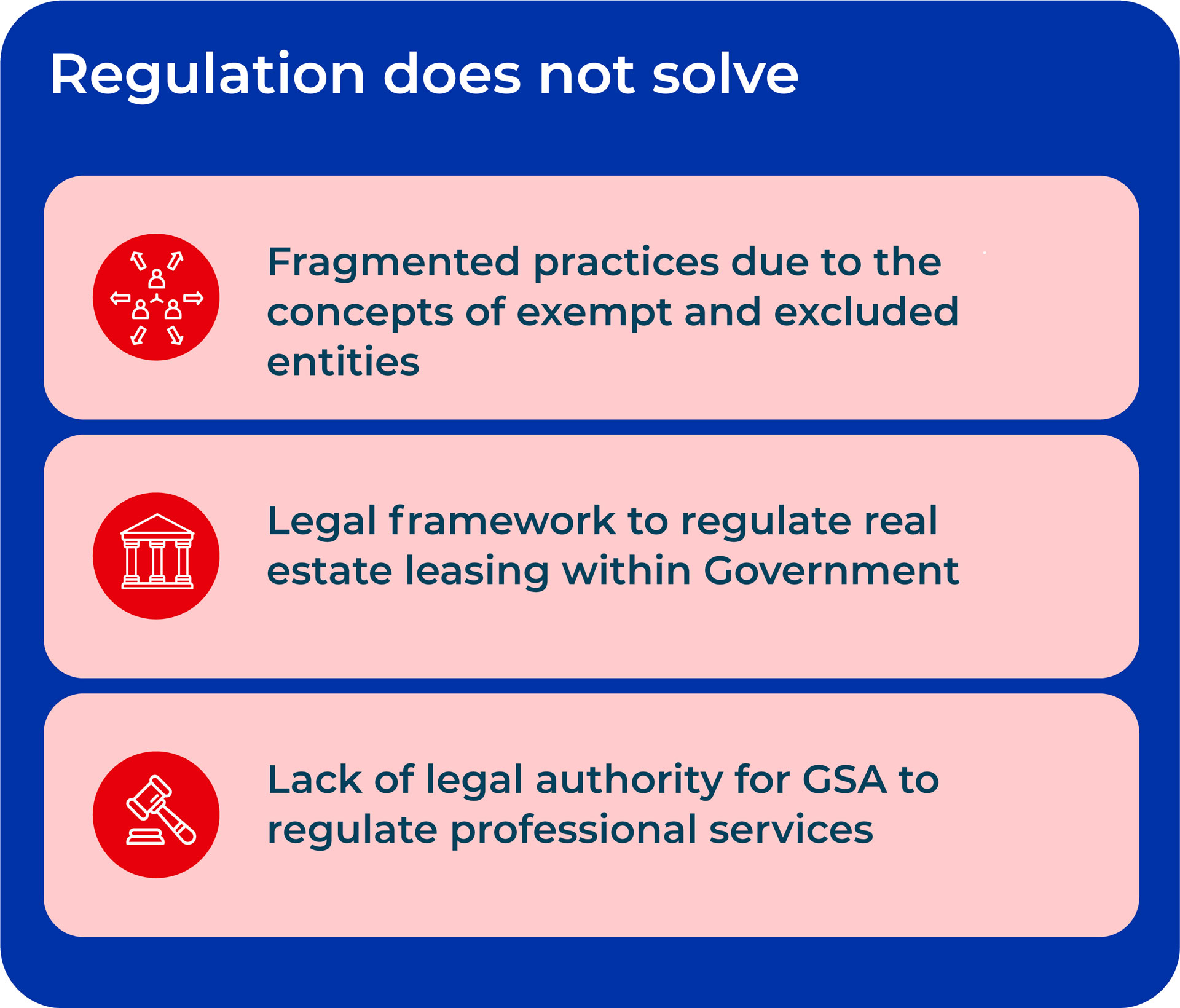
For example, new legislation amending Act 73-2019 is required to eliminate the concepts of exempt and excluded entities, thereby fully centralizing the procurement of goods, works, and non-professional services under GSA.
Procurement Graphic

New legislation must also be enacted to mandate competitive processes for professional services, including specialized technological support services, as these operate under less rigorous standards when compared to non-professional services. This disparity creates an incentive to reclassify services into the professional category, which is facilitated by the use of a vague statutory definition of professional services.

Lastly, changes to the legal framework governing real estate leasing require legislation, as Act 73-2019 does not grant GSA the authority to regulate these matters. Competitive rules and processes are minimal, and little control or guidance is specified for lease extensions or amendments.

Steps have been taken to make improvements in other areas. Ensuring the continuation of these advances is essential to the continued improvement of procurement processes.

GSA created a Training and Continuing Education Academy in August 2022. This initiative must continue so that all public employees engaged in procurement activities acquire the necessary expertise to reduce irregularities in purchasing processes. Building durable, well-qualified teams requires continuous education and certification of procurement professionals.

In 2020, GSA launched the Joint E-procurement Digital Intelligence (JEDI), as recommended by the Oversight Board. The JEDI currently serves as the Single Procurement Portal, a digital platform designed to modernize and streamline government procurement. It serves as a centralized electronic system that manages the full life cycle of acquiring goods and services, from initial orders to the issuance of a purchase.
JEDI Procurement Portal Graphic

By replacing paper-based processes with a unified digital workflow, JEDI improves efficiency, reduces administrative delays, and allows agencies to track each step of a transaction in real time. As GSA and the Oversight Board continue to enhance the digitalization of procurement processes, it is expected that the JEDI will no longer be used, once the Enterprise Resource Planning (ERP) system becomes operational.

Transparent and efficient procurement isn’t just a bureaucratic ideal, it’s a cornerstone of public trust and financial responsibility. When government purchasing processes are clear, competitive, and well-monitored, taxpayers can be confident that their money is being used wisely and businesses gain fair access to opportunities.

These principles help prevent waste, reduce corruption, and ensure that every contract delivers real value to the people of Puerto Rico.

The Oversight Board will continue to advocate for comprehensive procurement reforms, including the establishment of clear standards for competitive bidding, stronger monitoring of exempt entities, greater public transparency in contract awards, and stricter rules for the procurement of professional services.

Share the Post:

Related Posts