Oversight Board’s 52nd Public Board Meeting highlights work to strengthen Puerto Rico’s fiscal management
During the Financial Oversight and Management Board for Puerto Rico’s 52nd Public Board Meeting, Executive Director Robert F. Mujica, Jr., reported on the Government’s ongoing work to advance fiscal responsibility, implement modified accrual accounting, address fiscal pressures, and strengthen Puerto Rico’s long-term financial planning.
Mujica underscored that, moving forward, discipline is as essential as certified planning. “Certifying a budget without a deficit is one thing. Living within it is another. The discipline that matters now is simple: no new, unbudgeted spending during the year without first identifying the resources to pay for it”.
Discussions during the public meeting focused on the factors shaping Puerto Rico’s fiscal outlook, including the expiration of pandemic-related federal education funds, the risk of a “Medicaid cliff”, the need for operational alignment within agencies, the importance of transparent procurement practices, and the fiscal implications of current municipal excise tax structures.
Mujica also addressed the failed temporary power generation contract between PREPA and Power Expectations, highlighting the need for stronger statutory safeguards to ensure competitive, compliant, and transparent public contracting.
The Executive Director reaffirmed the Oversight Board’s priority of institutionalizing durable fiscal reforms—strengthening financial reporting, enhancing accountability, modernizing budgeting practices, and supporting initiatives that position Puerto Rico for long-term fiscal health.
Watch the 52nd Public Board Meeting.
Listen to the Executive Director’s remarks.
Advancing fiscal safeguards to ensure sustainable financial management in Puerto Rico
Oversight Board Fiscal Transformation Director Juan Carlos Blanco presented an update on Puerto Rico’s ongoing budget modernization efforts during the 52nd Public Board Meeting, highlighting the need to embed permanent fiscal safeguards into local law to secure the progress achieved under PROMESA.
Blanco explained that Puerto Rico’s financial crisis stemmed from long‑standing structural deficits, inadequate financial management, and reliance on debt to cover budget gaps—conditions that must not be allowed to recur.
The Fiscal Transformation Director also emphasized that lasting fiscal stability requires a modern statutory framework that strengthens budgeting practices, establishes clear financial controls, and aligns long‑term planning with the needs of the people of Puerto Rico.
“Fiscal transformation is our mandate to build a responsible, modern, and disciplined budget system to support long‑term prosperity in Puerto Rico”, Blanco emphasized.
He also highlighted that tools such as a Budget Stabilization Fund, a multi‑year financial plan, and a Public Projects Capital Fund are essential to ensuring that Puerto Rico maintains balanced budgets and secures sustainable access to capital markets in the years ahead. Governor Jenniffer González Colón recently reintroduced two legislative bills to create such tools.
The Oversight Board supports this legislation, and the Governor has expressed her commitment to sign it into law during the current legislative session.
Preserving government pensions by adhering to discipline
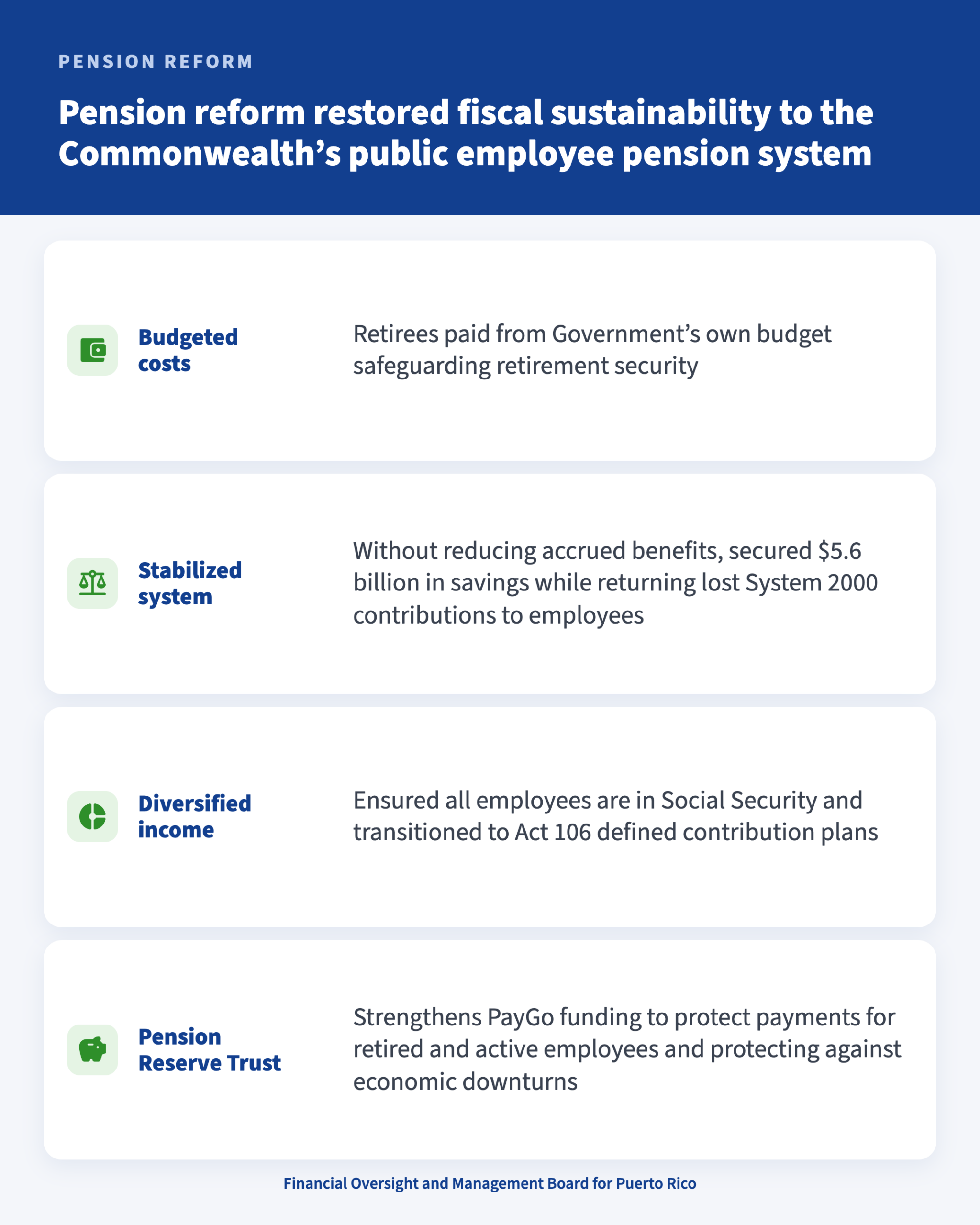
During the 52nd Public Board Meeting, Oversight Board Budget Management Director Elisa Guardiola provided a detailed overview of the Commonwealth’s pension landscape, emphasizing the long‑term fiscal implications of pension legislation and the importance of maintaining the safeguards established through recent reforms under PROMESA.
Comprehensive pension reforms in Puerto Rico have eliminated unfunded liabilities, restored employee contributions, transitioned all employees into sustainable retirement plans, and created the Pension Reserve Trust to secure long-term funding.
Guardiola underscored that the Commonwealth’s previous pension crisis—marked by $55 billion in unfunded liabilities and systems at risk of insolvency—demonstrates why any changes to retirement benefits must be supported by rigorous financial analysis and sustainable funding.
Guardiola also noted that recent proposals in the Legislative Assembly lack critical components such as actuarial review, multiyear evaluation, and identified funding sources, which are standard practices across well‑funded U.S. jurisdictions.
“To protect both retirees and Puerto Rico’s financial stability, policymakers need accurate, timely, and comprehensive information before advancing any pension-related measure”, Guardiola stated.
The Oversight Board believes pension policy must protect retirees while safeguarding Puerto Rico’s fiscal stability, ensuring that commitments made today can be fulfilled for decades to come.
Oversight Board requests FEMA guidance on municipal construction excise taxes
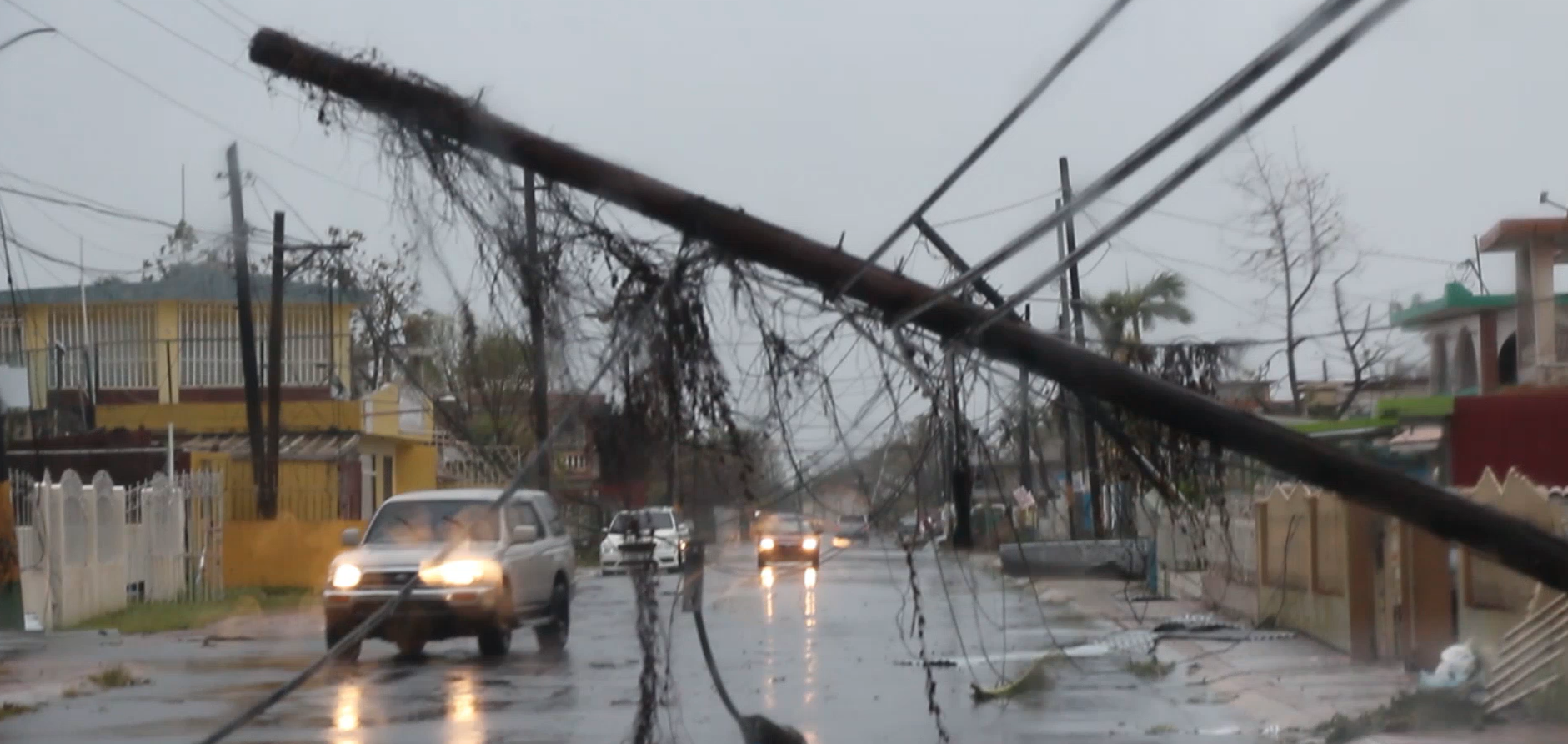
The Oversight Board has formally requested clarification from the Federal Emergency Management Agency (FEMA) regarding the allowability, as a reimbursable project cost, of municipal construction excise taxes (a local tax that municipalities charge on construction projects) at higher rates to federally funded projects.
In its letter to FEMA Administrator Cameron Hamilton, the Oversight Board noted that 22 municipalities currently impose higher excise tax rates on government‑funded projects than on privately funded construction, a practice that expanded significantly following Hurricane María.
The Oversight Board’s request follows months of congressional inquiries seeking information about the impact of these municipal practices on federal disaster funding.
In August, the Oversight Board informed Resident Commissioner Pablo José Hernández that differential tax rates may jeopardize Puerto Rico’s access to federal recovery funds if determined “unreasonable” or “discriminatory” under federal cost principles.
In September, the Oversight Board responded to a similar congressional inquiry from U.S. Representative Paul Gosar, outlining concerns that certain municipalities’ tax practices could increase reconstruction costs, divert federal dollars away from critical projects, and undermine procurement integrity.
Given these risks, the Oversight Board has asked FEMA to clarify whether elevated municipal tax rates on FEMA funded work are allowable costs subject to reimbursement and how FEMA intends to treat taxes, penalties, or interest imposed retroactively on past reconstruction projects.
Read our most recent blogs: