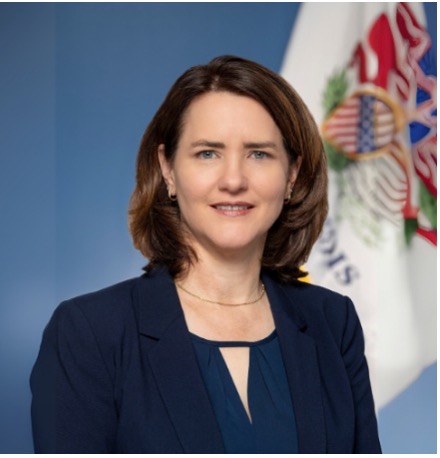
Director of the Illinois Governor’s Office of Manage and Budget Alexis Sturm has over 25 years of experience in budgeting, fiscal policy, debt management and administration. She has been a part of the Government of Illinois throughout those years, serving in the administrations of five governors and four comptrollers.
Fiscal stability begins when there is stakeholder buy-in.A successful budget development process works when there is a strong budget office creating trust in the numbers, a strong executive branch, multi-year planning, and a willingness to use surpluses for long-term fiscal health rather than ongoing spending. Illinois has faced significant fiscal stress and used stronger fiscal policies to rebuild reserves and improve its credit ratings. Budgets are one of the foundational pieces for economic stability and development, investor confidence, and public trust.
- Building a Budget System that “sticks”
A key element in achieving that goal is to establish a system that will remain in place for years and decades. For that you need consensus. In Illinois the most important thing was stakeholder buy in – support from the governor, the executive branch, the legislative branch, but also the business community, and the think tanks. After years of fiscal stress and being at the brink of falling below an investment grade in credit rating, Illinois focused on rebuilding the fiscal frameworks. For a budget process to work well, you must trust the numbers, the revenue forecasting, and the expenditure modeling. Having confidence in a budget office makes a lot of difference.
- Transparency, Affordability, Discipline: Essential for Capital Planning
In Illinois, the state’s funding is protected through various methods, including the publication of all financial information to ensure transparency, placing a 7% limit on general fund appropriation for debt service, and having asset management systems that use data analytics to prioritize projects. Most importantly, Illinois publishes an annual capital planning book that illustrates the state’s five-year outlook on investments to tell the story of capital spending and not just list projects, provide updates on what our projects are doing and the impact that they’re having and really go into details on the revenues that are supporting it.
- Reserves are Central to Credit Strength
Rating agencies place significant weight on the reserves, the impact of debt payments, and measurable capital projects of a government. Illinois used surpluses to build reserves and pay down debt instead of expanding ongoing spending, because that strategy better aligned with the scorecards and expectations of Moody’s and S&P. The Illinois budget team spent a lot of time with the rating agencies in the last seven years to understand their methodologies.

As the Director of New Mexico’s State Budget Division, Dr. Andrew Miner, leads the development of the Executive Budget and oversees implementation of the state’s operating budget, driving more efficient and timely processes. His background includes roles as analyst and Deputy Director within the Division since 2014, along with prior experience in the Wisconsin State Budget Office. He is also a leader in budget training, having conducted annual Budget Boot Camps since 2020 and contributing to NASBO-led sessions on budget analysis.
Getting the budget right is step number one.The budget is the one thing governments must do right. It is the foundational policy and moral document that shows what a government truly values. Taxpayers deserve to have a budget and a government that reflects their values, and that addresses them and serves them in a fiscally responsible way. Lasting reform requires an open and transparent process grounded in a clear statutory framework and sustained through a strong culture of fiscal discipline. High-functioning budget offices sometimes depend as much on communication, customer service, and the ability to collaborate with people that as on technical budget skills.
- Internal Controls Depend on a Strong ERP System
New Mexico’s budget process is highly controlled: once budgets are enacted by legislation, agencies submit their proposed operating budgets, the budget division reviews them, and the approved budgets are loaded into a strong enterprise resource planning (ERP) system as controlled budgets. Agencies cannot simply overspend past their authorized level. Budget adjustments require a formal process with executive and legislative review. If an agency has a $10 million appropriation of the general fund and spends all of it by April of the fiscal year, they’re out of luck; they can’t spend anymore.
- Modified Accrual Accounting as a Tool for Avoiding Crisis Decision-Making
Modified Accrual Accounting standards are beneficial to budget development because it ties revenues and expenses to the fiscal period in which they are available and incurred. This technique prevents the state from getting into trouble by incurring liabilities that it doesn’t have the revenues for, which also avoids situations in which the state resorts to shifty maneuvering and moving some revenues off the books or delaying some liabilities into the next fiscal year. Ultimately, it helps decision-makers see whether anticipated revenues are truly sufficient to cover expected expenses.
- Continuity Across Administrations
Working to instill a culture of fiscal responsibility both in the legislative and the executive branches is a continuous goal. Training, mentorship and institutional knowledge sharing at each stage of the budget process is essential. Further, having employees who are not necessarily appointed or elected but are career civil servants who are very tightly involved in the process can help both branches trust the numbers more.
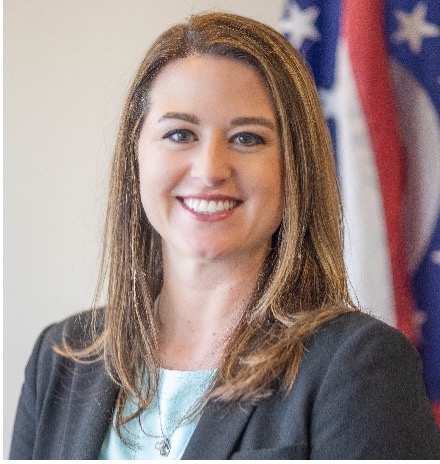
Christina Frass has dedicated her career to state service. She is currently the Assistant Director at the Ohio Office of Budget and Management, and she previously served as the Chief Financial Officer at the Ohio Attorney General’s Office, and as Assistant Director for Budget and Planning at the Ohio Department of Education.
Stable budgeting leads to confidence in the government.The public should see every penny that is received and what it’s used for. This not only builds people’s trust in their government but also helps to rebuild it with credit rating agencies. Stable budgeting creates predictability, not only for governments to move forward with confidence but for the citizens and businesses it serves as well. It is not the government’s money; it’s the general public’s money and they deserve to be able to see where it’s going, what’s coming in and where it’s going.
- Performance Metrics Should Drive Better Decisions, Not Louder Ones.
It’s important that making funding decisions should be based on data and not on how people feel – they must be grounded in evidence. Performance measurements serve a fundamental purpose: testing whether public dollars are producing the results the government promised they would, and once that is determined, it can inform important decisions such as eliminating funding to those programs that don’t work and strengthening those that do. Governments have a responsibility to their taxpayers to stop spending money on something that is not effective. Selecting the right metrics for each program can be challenging; in Ohio it is a continuous effort with that requires significant collaboration.
- Planning for Long-term Liabilities Proactively Not Reactively
Long term liabilities, like debt service, are easy to predict and budget because the state controls them. The state makes the decisions about how much debt to issue, about which projects to undertake. The difficult risks are external, such as changes in federal funding. In Ohio, we made the decision to not automatically absorb every federal funding withdrawal. We created legal clarity up front such that a loss of federal funding is a policy discussion and a choice, rather than an automatic backfill obligation. This fosters a discipline of planning across administrations, controlling what you can, and clearly defining how to respond to what you cannot.
- Reserves: Buying Time to Regain Balance
Reserves have a strategic purpose, they should be there to buy you time if something bad happens, until you can get back in balance. They are a tool for transition and stabilization during government stress, not a substitution to justify one-time spending. This is especially relevant for fiscal reform because it reinforces the difference between a temporary cushion and a structural solution.

As Director of North Dakota’s Office of Management and Budget, Joe Morrissette oversees key areas of statewide fiscal and operational management. First appointed in 2018, he returned to the role in 2024 after taking some time away to teach governmental accounting and taxation courses. His background includes nearly 30 years in state budgeting, revenue forecasting, and tax policy, with prior roles as Deputy Tax Commissioner and fiscal analyst.
Permanent guardrails are essential to sustaining fiscal discipline.Lasting discipline can be difficult to maintain. That is why establishing permanent guardrails that are hard to change is essential. These guardrails help limit unsustainable borrowing, protect reserves, and reduce the risk of one-time revenues being assigned to recurring expenses. Every jurisdiction faces unique challenges, but durable transformation can be achieved when there is collaboration, and the will and desire to build statutory and constitutional frameworks that preserve discipline across administrations.
- Forecasts: Reasonable but Conservative
Budgeting should start with a revenue outlook that doesn’t assume the worst but minimizes risks on the front end: the challenge is the balancing of priorities and working with the governor and defining what the level of resources is going to be. Risks and competing priorities that affect revenue will always exist but if statutory and constitutional frameworks are in place, resisting the temptation to overspend during good years and overuse reserves during bad years will be easier.
- Managing Volatility with Multi-year Planning
A long-term plan helps prevent temporary surpluses from being treated as permanent revenues. Multiyear planning is so important to keep your eye on the ball in the long term, beyond the current administration or beyond the current legislative leadership, and help ensure today’s budget decisions move the government toward long-term balance and prevent a government from falling into deficits or structural gaps. North Dakota’s long-term strategy is to trim spending back, keep it flat over the next three biennium’s and ensure that ongoing revenues and spending are balanced by 2032.
- Early Warning Signs to Avoid Structural Imbalance
North Dakota watches revenues closely, publishes monthly tracking reports that everyone can see, including the public and the legislature. The state has also established a process for issuing a new forecast that reduces spending if revenues fall below expectations. Most importantly, state statutes require the executive branch to make some of that reduction before they can even access their budget stabilization fund. So, there’s kind of a dual process in place. This helps the state stay in balance.
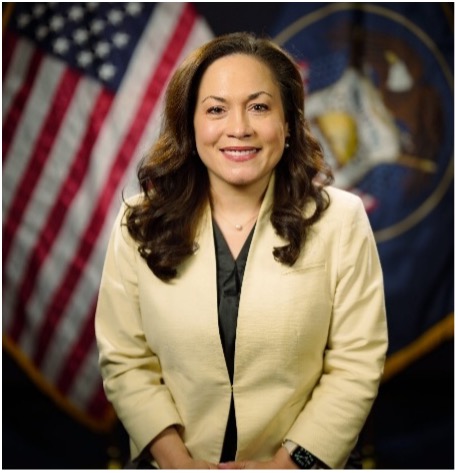
Sophia DiCaro is the Executive Director of the Governor’s Office of Planning and Budget in Utah and Senior Advisor to Governor Spencer J. Cox. She has extensive experience in public finance and policy. DiCaro’s background includes 15 years in budget, economic analysis, and executive leadership roles, along with private sector experience as a chief officer in an investment firm. She also served as a state legislator and contributes to multiple boards and commissions.
A successful budget transformation must be able to transcend political boundaries.Fiscal strength is a shared value rather than a partisan position, regardless of who is in power. Both Democrats and Republicans should agree that protecting a state’s fiscal strength is a line that should not be crossed. Successful budget transformation depends on building an ongoing framework that lives on beyond who’s governor, beyond who’s in the legislature.
- Lasting Reform Requires Cultural Change
Government terms are short; generally two-to-four-year cycles. It’s challenging to successfully implement new budget procedures from one administration to the other because when terms end, the new administration many not continue this work. Lasting change comes down to having strong processes, codified into law, to ensure everyone is operating under the same rules, regardless of politics. That can be achieved by tapping into a society’s core values, agreeing on those values and putting them on paper.
- Safeguarding Revenue with Risk Management
Stress testing and risk exercises are critical tools in managing volatile revenue during times of crisis. Utah stress test for volatility and try to project into the future to see how volatile a revenue source is going to be. Further, it is important to work with agencies to scale back expenditures when revenue projections are down and using budget buffers, which is ongoing or recurring money that is only spent on one-time expenses, so that, when money is tight, the government can spend the budget buffers first without creating structural budget issues.
- The Last Resort Tool: Debt Capacity
Debt capacity is a tool that should be wisely protected and reserved as a worst-case scenario backup plan. In Utah, debt is the last resort. If revenues decrease and resources that are set-aside for one-time capital projects can no longer be used, then the state will be able to borrow and use debt to pay for those one-time capital improvements. Having a low debt payment ratio is also important, so that a government has capacity to afford to borrow when needed if the economy is in a downturn and interest rates increase.